Buried beneath Michigan State University’s campus are the seeds of one of the world’s longest continuously monitored scientific experiments — and now, a new production presented by MSU’s Department of Theatre is bringing that history to life.
Currently in its 147th year, the William J. Beal Seed Experiment serves as the inspiration for Echoes from the Banks of the Red Cedar, an immersive dance theatre production written, choreographed, and directed by Alexandria Davis, Assistant Professor of Dance in MSU’s Department of Theatre. The work explores the resilience of dormant seeds and the unseen forces shaping education.


Running Feb. 14–22, 2026, at the Fairchild Theatre in the MSU Auditorium, Echoes from the Banks of the Red Cedar draws on themes of dormancy, time, and delayed emergence, translating scientific inquiry into live performance.
The Beal Seed Experiment began at Michigan State University in fall 1879 when William J. Beal, an MSU professor and botanist, buried 20 glass bottles filled with sand and seeds from more than 20 plant species. He wanted to study how long they could remain dormant and still germinate under favorable conditions. Since then, researchers have unearthed one bottle every 20 years, most recently in 2021, to study the seeds’ viability, making the project the longest-running scientific study of its kind.


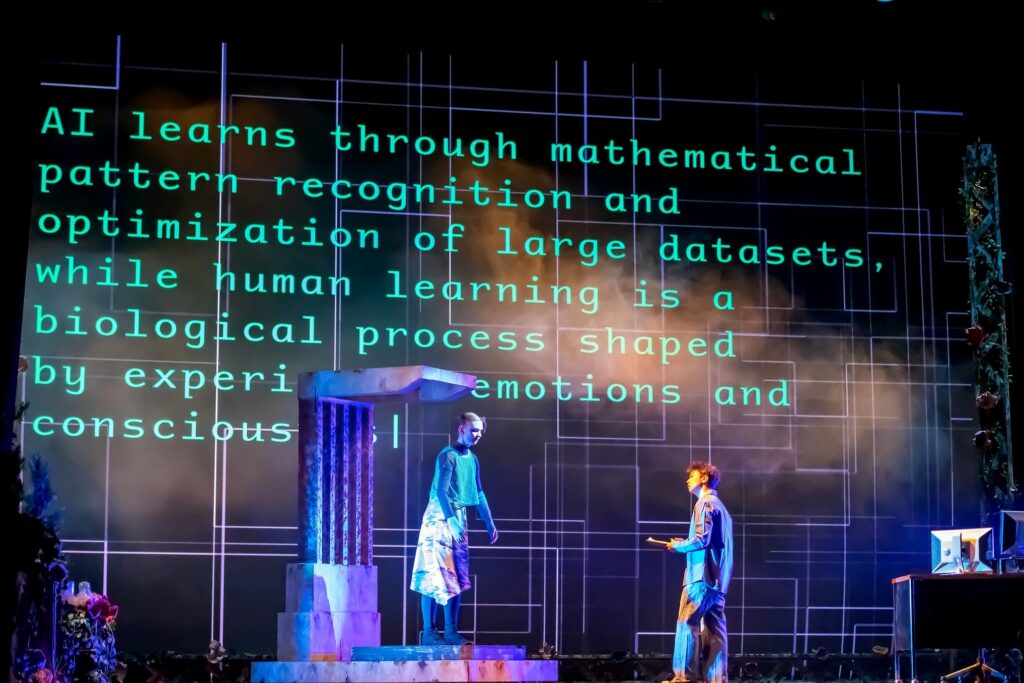
For Davis, that long arc of waiting and renewal offers a powerful metaphor for how institutions and identities evolve over time. Echoes from the Banks of the Red Cedar is a postmodern exploration rooted in a series of investigative questions about Beal’s research. The work asks what lies beneath the surface and what conditions allow meaningful growth, particularly in relation to MSU’s history as a land-grant institution.
Through choreography, Davis traces how values are transmitted and transformed across generations. Through movement, time, music, care, and community, the production weaves together multiple narratives to examine the cultural foundations and values that continue to shape an evolving Spartan identity.
“My goal has been to artistically shape the echoes I have heard about the history and legacy of Michigan State University from various contexts into a performance that exists both in and outside of time and across spaces relevant to the evolution of this campus…”
Alexandria Davis, Assistant Professor of Dance
Echoes from the Banks of the Red Cedar ultimately celebrates our collective ability to grow and transform, even after long periods of dormancy.
The production features a cast of 15 student performers and a large creative team supported by more than a dozen faculty and professional mentors, spanning choreography, design, and production expertise. The project also includes collaboration with Department of Theatre BFA and MFA students from Management and Tech Design and MSU Dance minors.

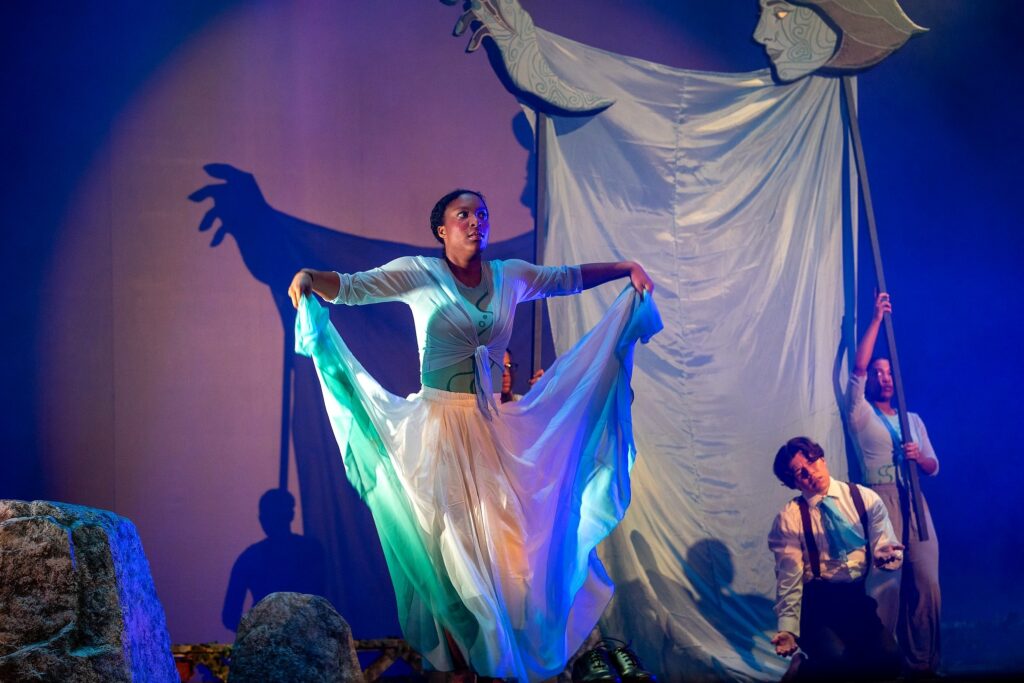

Running approximately one hour, Echoes from the Banks of the Red Cedar invites audiences to reflect on what remains dormant within our shared academic and cultural landscapes and what might still grow with time, attention, and care.
“My goal has been to artistically shape the echoes I have heard about the history and legacy of Michigan State University from various contexts into a performance that exists both in and outside of time and across spaces relevant to the evolution of this campus, which sits along the headwaters of the Red Cedar River,” Davis said. “I want the audience to engage in dialogue about what they see and what it reminds them of. I hope the echoes of those dialogues evolve into colorful discussions about what it all may or may not mean and why it matters.”

Performance Dates and Times
- Saturday, Feb. 14, 7:30 p.m.
- Sunday, Feb. 15, 2 p.m.
- Wednesday, Feb. 18, 7:30 p.m.
- Thursday, Feb. 19, 7:30 p.m.
- Friday, Feb. 20, 7:30 p.m.
- Saturday, Feb. 21, 7:30 p.m.
- Sunday, Feb. 22, 2 p.m.
Tickets
Tickets are now on sale and can be purchased online at whartoncenter.com, in person at the Wharton Center Ticket Office, by calling 517-432-2000 or 1-800-WHARTON, or one hour prior to a performance at the Fairchild box office.
- General Admission: $29
- Seniors (60+): $23
- MSU Faculty and Staff: $23
- Non-MSU Students: $13
- MSU Students: FREE ticket per student with valid MSU ID. Pick up the free ticket an hour before the performance at the Fairchild box office or day of/days prior at the Wharton Center Ticket Office.
By Buu-Tran Duong and Kim Popiolek