With the start of the Fall 2026 Semester, the College of Arts and Letters is welcoming 20 new faculty and staff members whose talents, experiences, and perspectives will contribute to the college’s teaching, research, creative activity, and student support.
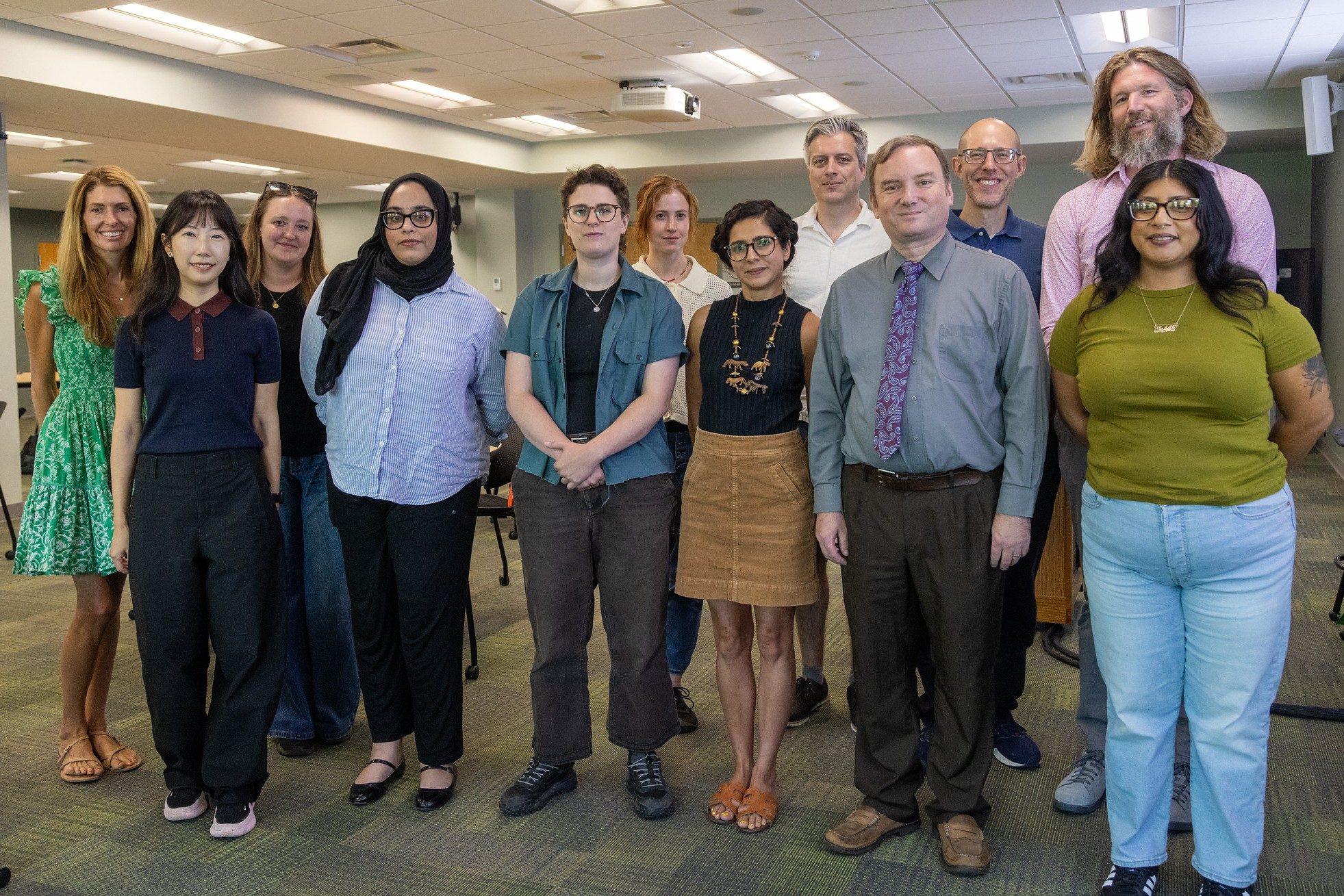
“Our newest colleagues bring experiences, ideas, and expertise that will add to the intellectual and creative life of our college and campus,” said Thomas Stubblefield, Dean of the College of Arts and Letters. “I am excited to welcome them to our community and to see the contributions they will make through their work with our students and with one another. Their arrival marks not only the beginning of a new academic year, but new possibilities for collaboration, discovery, and growth across the college.”
New faculty and staff members will be recognized during the College of Arts and Letters’ 2026 Faculty and Staff Welcome Reception on Monday, Sept. 28, from 2:30 to 4:30 p.m. in the Lincoln Room of the Kellogg Hotel and Conference Center.
“Our newest colleagues bring experiences, ideas, and expertise that will add to the intellectual and creative life of our college and campus. I am excited to welcome them to our community and to see the contributions they will make.”
Thomas Stubblefield, Dean of the College of Arts and Letters
Please join us in welcoming the following faculty and staff to the College of Arts and Letters:
Elybeth Alcantar

Elybeth Sofia Alcantar is the 2026-27 American Indian and Indigenous Studies Predoctoral Fellow at Michigan State University and a doctoral candidate in the Department of Geography and the Environment at the University of Texas at Austin. As a broadly trained geographer, Alcantar’s disciplines span across cultural geography, feminist political ecology, and Indigenous geographies.
Alcantar’s research centers Indigenous Oaxacan social movements, refusals to forced displacement, and community based environmental planning and development in Southern Mexico. She has published articles in Cultural Geographies, The Professional Geographer, and Latino Studies. Alcantar’s co-written article with Kaily Heitz (Geography, UCLA) titled “Locating a Sentido de Lugar: Community Writing and Sensorial Storywork as Geographic Method,” will be published later this year in ACME: An International Journal of Critical Geographies.
Aleisha Barton

Aleisha Barton, Assistant Professor of Modern and Contemporary Art History in the Department of Art, Art History, and Design, is an historian of artistic process and materiality, with specialties in print and immersive environments. She has received support for her research from institutions such as the Henry Luce Foundation, American Council of Learned Societies, Foundation for Advancement in Conservation, and Harvard University. Her manuscript in progress, “Your Eyes Are Limited”: Psychedelic Print in the Postwar Media Landscape, analyzes countercultural ephemera produced in San Francisco, California, during the mid-to-late 1960s.
Barton holds a Ph.D. in Art History from the University of Minnesota. She has taught previously at Boston University and St. Cloud State University.
Raven Baugh

Raven Baugh is the new Career Consultant in the College of Arts and Letters. She completed her Bachelor of Arts in American Studies from the University of Richmond and her Master of Arts in Student Affairs Administration from Michigan State University. Prior to this role, she worked across MSU including in New Student Orientation, The Writing Center, Honors College, and Office of Student Support and Accountability.
Through her experiences, Baugh has gained expertise in student support, consulting, programming, and family engagement. She loves supporting students as they navigate their next steps and find meaningful pathways. Beyond work, you can find her playing games, crafting, taking walks, eating ice cream, or engaging in community events.
Katherine Bernest Hilker

Katherine Bernest Hilker, Instructor of Spanish in the Department of Romance and Classical Studies, holds an M.A. in Hispanic Literature from Michigan State University and a B.A. in Spanish and Italian from Saint Mary’s College. She previously taught Spanish language and grammar at MSU and later served as an Adjunct Professor and Academic Advisor at the American University in Dubai.
Bernest Hilker’s professional experience includes several years in international higher education, including work on the development of higher education initiatives while living and working in Equatorial Guinea, the Republic of Congo, and Mozambique. Her academic interests include Hispanic language and culture, second-language learning, and the linguistic and cultural connections between Spanish and Italian.
Kevin Elliott
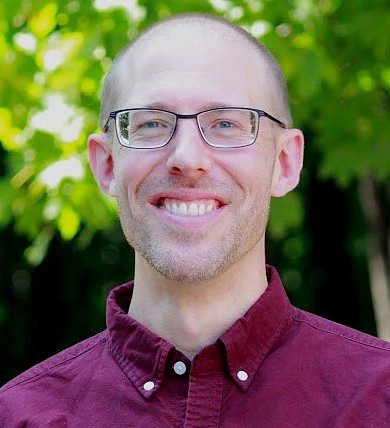
Kevin Elliott is a Red Cedar Distinguished Professor and the new WK Kellogg Chair for Agricultural, Food, Community, and Environmental Ethics, a collaborative position between the Department of Philosophy in the College of Arts and Letters and the Departments of Community Sustainability and Fisheries and Wildlife in the College of Agriculture and Natural Resources. He previously was appointed in Lyman Briggs College and the Department of Fisheries and Wildlife at MSU.
Elliott’s research is centered on the philosophy of science and practical ethics, focusing especially on the roles that ethical and social values play in environmental research and policy. His books include Values in Science (2022), A Tapestry of Values: An Introduction to Values in Science (2017), and Is a Little Pollution Good for You? Incorporating Societal Values in Environmental Research (2011), as well as the edited volume (with Ted Richards) The Routledge Handbook of Values and Science (2026).
Rebecca Fishow

Rebecca Fishow, Assistant Professor of First-Year Writing in the Department of Writing, Rhetoric, and Cultures, is a writer, educator, and visual artist. She is the author of two collections of short fiction, How to Love a Black Hole (2025) and The Trouble With Language (2020), which won the 2019 Holland Prize for Fiction. Her chapbook, The Opposite of Entropy, was published in 2018 by Proper Tales Press.
Fishow’s work has appeared in Quarterly West, Tin House, Joyland, The Believer Logger, Smokelong Quarterly, and other publications. She holds an MFA from Syracuse University and is a fifth-year Ph.D. candidate at the University of Illinois Chicago.
Madiha Ghous

Madiha Ghous, Assistant Professor in the Department of Religious Studies, recently completed her Ph.D. in English from MSU. Her research and teaching interests span World Literatures, Comparative Literature, Postcolonial Studies, Critical Muslim Studies, Cultural Cold War Studies, and South Asian Studies.
As a graduate student at MSU, Ghous received several awards recognizing her scholarship, teaching, and academic service, including the Department of English’s Diana Cavett Excellence in Graduate Student Teaching Award, Ruth A. and John Yunck Endowed Scholarship, and the Council of Graduate Students Diversity, Equity, and Inclusion Award. During her doctoral studies, she designed and taught courses in English, Women and Gender Studies, the Writing, Rhetoric, and Cultures program, and the Center for Integrative Studies in the Arts and Humanities.
Daniel Goodhue

Daniel Goodhue, Assistant Professor in the Department of Linguistics, Languages, and Cultures, previously worked as a language data scientist and technical program manager for Ascendion where he applied his expertise in language science to the development of speech-to-text AI software for underserved languages.
Goodhue has a Ph.D. in Linguistics from McGill University. Using experimental methods to investigate language in both adults and children, his research explores complex linguistic phenomena from independently motivated grammatical representations (syntax, sematics, and prosody) and pragmatic principles. He has held positions as a research scientist in linguistics at several institutions, including the Leibniz-Centre for General Linguistics in Berlin and the University of Maryland, College Park.
Brandon R. Grafius
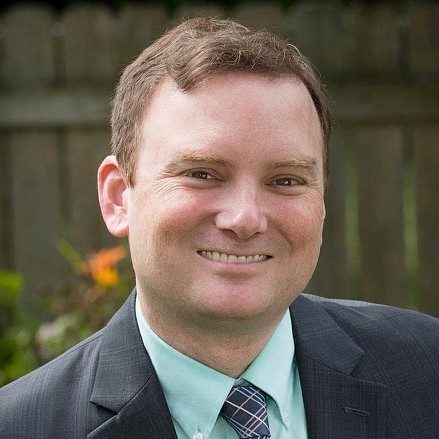
Brandon R. Grafius is joining the Department of Religious Studies as a Visiting Assistant Professor during the 2026-27 academic year. He comes to MSU from Ecumenical Theological Seminary, Detroit, where he is Academic Dean and Professor of Biblical Studies. He earned his Ph.D. in Bible, Culture, and Hermeneutics from Chicago Theological Seminary.
Grafius has published widely on the intersection of horror, religion, and politics in venues including Salon, The Metropolitan Review, and The Christian Century. His most recent books include Scared by the Bible: The Roots of Horror in Scripture (2025) and Concerning Dust and Ashes: Affects of Horror in the Hebrew Bible (2026). He is co-editor of The Oxford Handbook of Biblical Monsters, which was a finalist for the Bram Stoker Award.
Yawen Han

Yawen Han, Visiting Scholar in the Department of Linguistics, Languages, and Cultures, is a Professor of Applied Linguistics at Southeast University in Nanjing, Jiangsu, China. His research is centered on language policy, internationalization in higher education, and second language acquisition.
Han has authored more than 50 research articles published in domestic and international journals and has undertaken multiple grant-funded research projects. He is the Executive Director of the Research Center on Language Policy for Asia-Pacific Countries in Jiangsu Province. He also has served as the editorial board member for Current Issues in Language Planning since 2021.
Jordan House

Jordan House, Academic Specialist of Technical Direction in the Department of Theatre, is a professional Technical Director and Scenic Designer. She earned her MFA in Theatre Design (Scenic Design Emphasis) from Illinois State University and her BFA in Theatre Design and Technology (Scenic Design Emphasis) as well as a Minor in Art History and Visual Culture from Michigan State University.
House is coming home to Michigan from Wagon Wheel Center for the Arts in Warsaw, Indiana, where she’s been Technical Directing and Designing for the last three summers.
Sophia Khan

Sophia Khan, Assistant Professor of Creative Writing in the Department of English, teaches and writes literary fiction, science fiction, creative nonfiction, and colonial steampunk. She is the author of Dear Yasmeen (2017) and The Flight of the Arconaut (2020). Her short fiction has appeared in Arts & Letters, Honey Lit, Kestrel, and the Indiana Review, among others.
Khan won the 2026 Plentitudes Prize for Nonfiction for “The Terminal Velocity of Narrative” and her stories “Aabirah” and “The Kite” were shortlisted for the Commonwealth Short Story prize in 2022 and 2016. She has a B.A. from Haverford College, an MFA from Sarah Lawrence College, and a Ph.D. from Western Michigan University.
Minjin Kim

Minjin Kim, Assistant Professor of Applied Linguistics and Korean in the Department of Linguistics, Languages, and Cultures, earned her Ph.D. in Applied Linguistics from Pennsylvania State University. Her research focuses on corpus linguistics, second language acquisition, and language learning and technology, particularly generative AI.
Kim’s work has appeared in The Modern Language Journal, Journal of English for Academic Purposes, Language Teaching Research, and Language Learning & Technology. Before joining MSU, she taught Korean and coordinated the Korean language program at the University of Mississippi. Her teaching experience includes Korean, English for Academic Purposes, and applied linguistics. At MSU, she serves as Korean Program Director and Co-Director of the Second Language Studies Corpus Lab.
Ryan Scott Long

Ryan Scott Long, Assistant Professor in the Department of Theatre, recently earned his MFA in Theatre Design and Graduate Certificate in Arts, Cultural Management, and Museum Studies, both from Michigan State University.
A theatrical artist, educator, and storyteller, Long has experience in sound and costume design, theatrical education, and violence prevention education. He also is passionate about writing music. His first album, catharsis, was released in 2023. He received a BFA in Theatre Performance and Production from Texas State University.
Jacob Meier

Jacob Meier is an Operations and Technical Operations Coordinator for the College of Arts and Letters. He holds a Bachelor of Arts in Arts and Humanities as well as a Bachelor of Science in Computer Science, both from Michigan State University. Additionally, he received an Associate in Theatre and in Computer Science from Lansing Community College.
Meier also plays piano and guitar and would like to one day complete a triathlon. In his free time, he enjoys hanging out with his dog, doing crosswords, and “trying to destabilize the patriarchy.”
Yaqueline Moeller

Yaqueline Moeller is an Instructor of Spanish in the Department of Romance and Classical Studies.
She previously served as an Adjunct Professor of Spanish in the World Languages Department at Calvin University in Grand Rapids, Michigan, where she also served as the Program Director for the Semester in Spain program where students spend the spring semester studying in Oviedo, Spain. Moeller also has taught Spanish in the Foreign Languages Department at Grand Rapids Community College and at the University of Michigan.
Izze Norman

Izze Norman, Assistant Professor of Graphic Design in the Department of Art, Art History, and Design, earned a Master of Design (MDes) from the University of Illinois Chicago and served as a Graduate Teaching Assistant in the School of Design. After earning an MDes, Norman worked as an Adjunct Professor of Instruction at Columbia College Chicago, Loyola University of Chicago, Northeastern Illinois University, and University of Illinois Chicago.
Norman’s collaborative publishing practice, TOMATO TOMATO TOMATO, with Emma Dwyer explores the book as a form and what publishing can mean. Their work addresses the ways in which power and meaning are produced, fantasy as a means of expression, violence as metaphor, and the desire to be ungovernable.
Kahlia Roberts

Kahlia Roberts, Assistant Professor in the Department of Philosophy, earned a Ph.D. in Philosophy from Michigan State University in Spring 2026. Their research focuses on structural justice in higher education, structural research ethics, and anticolonial research.
Roberts is the Director of Operations for MSU’s Research Institute for Structural Change (RISC), which support community-led initiatives that address health disparities and promote equitable policy. Roberts’ broader scholarly interests include structural feminisms, anticolonial philosophy, disability philosophy, and philosophy of higher education.
Alan E. Schwanke

Alan E. Schwanke, Assistant Professor in the Department of Theatre, is a Professional Scenic Designer, member of the United Scenic Artists Union, and Scenic Design Mentor Representative for USITT. He earned his MFA in Theatrical Stage Design from Northwestern University and his BFA in Theatre Design and Technology from the University of Central Oklahoma. He has taught at Northwestern University, Depaul University, and was Assistant Professor of Scenic Design at the University of Alabama Birmingham.
Professionally, Schwanke was the Resident Design Assistant for the Oregon Shakespeare Festival before becoming an Associate Designer to Tony and Olivier Award winning Scenic Designer Todd Rosenthal in Chicago. National design credits include: Steppenwolf Theatre, Chicago Shakespeare, Northlight Theatre, American Music Theatre Project, Asolo Repertory, Portland Center Stage, and Artists Repertory.
Antonius Weixler

Antonius Weixler is the Max Kade Visiting Professor of German in the Department of Linguistics, Languages, and Cultures. He studied German Literature, Art and Media Studies, and Political Science at the University of Konstanz in Germany and at University College Cork in Ireland. He earned his Ph.D. from the University of Wuppertal in Germany.
Weixler has been an Assistant Professor (Lehrkraft für besondere Aufgaben) at the Bergische University of Wuppertal since 2018. His research focuses on Narratology, Avant-garde, Contemporary Literature, Authenticity, and Pop Culture. His recent publications include an anthology on the work of Hermann Kinder and another on the narrative of everyday life (Alltag erzählen. Narrative Dimensionen des Gewöhnlichen. Stuttgart/Weimar: Metzler 2025. Co-Editor together with Matthias Grüne, Sabrina Huber, and Christian Klein).
By Kim Popiolek


